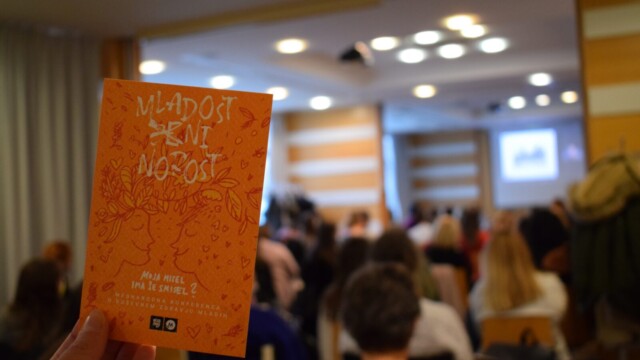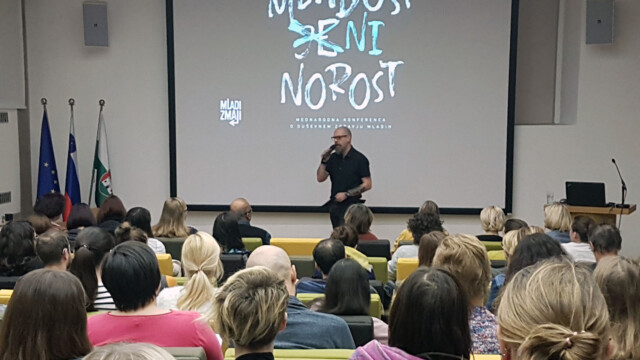

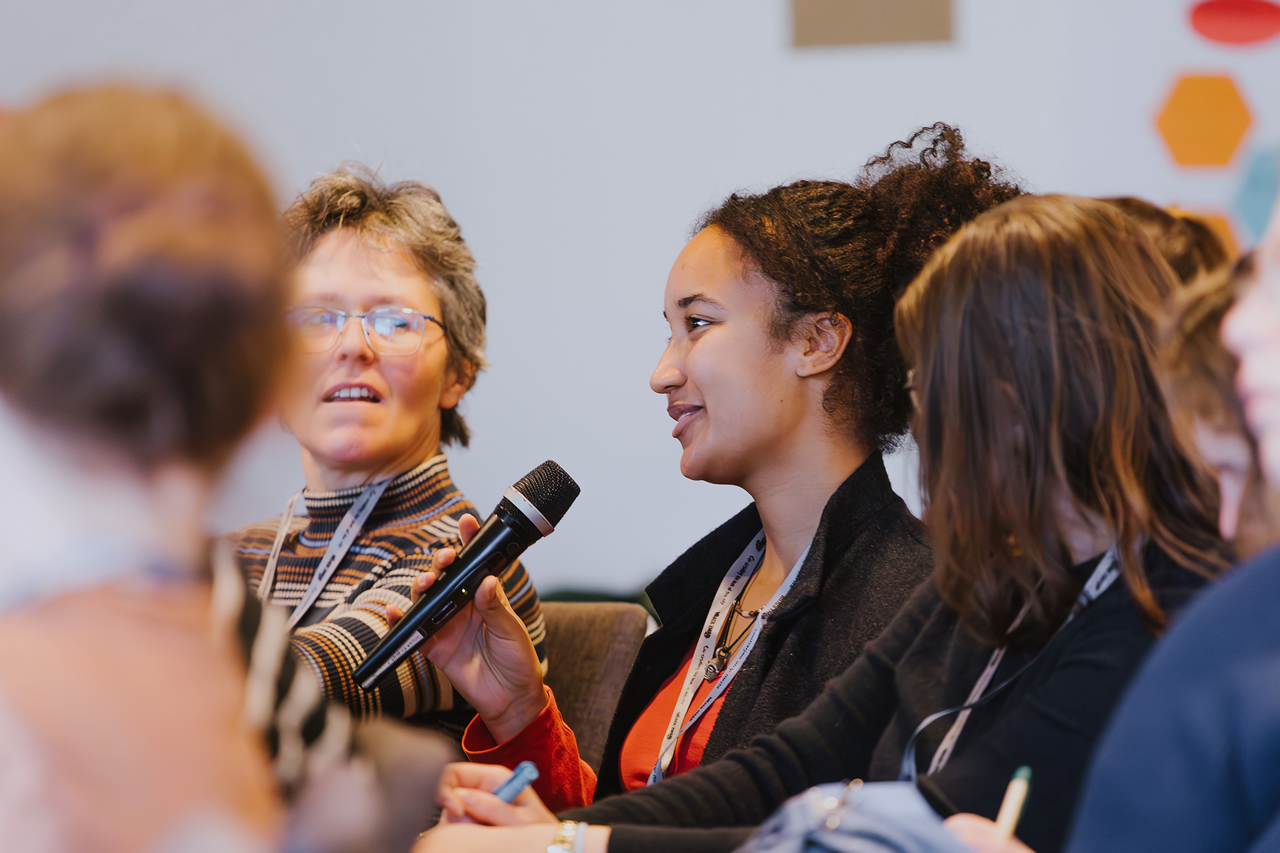
From 26 to 28 November 2025, Mladi zmaji organised the seventh edition of the conference Mladost (je) ni norost – It takes a forest to grow a mushroom, this time as a special edition – international gathering. For the first time, youth workers, volunteers, students and professionals from all across Europe came together — exploring how to support each other in the demanding, yet meaningful work of youth mental health.
With the central theme of support systems for youth workers, the programme addressed three interconnected levels: self-care & self-support, organisational support, and community as a resource.
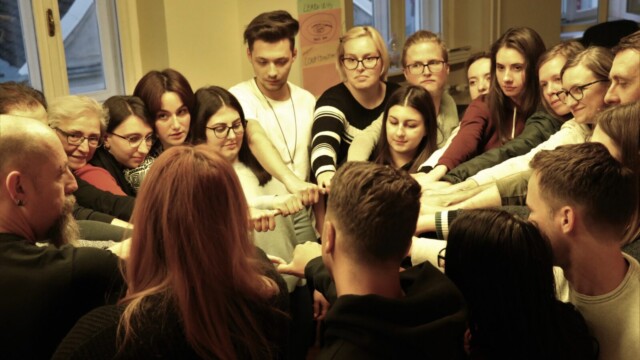
On 26th and 27th of November, a group of forty international participants gathered in a smaller, more intimate setting to explore the conference theme in depth. These first two days were designed as a collaborative learning space, filled with connecting activities, shared reflection and peer-to-peer exchange. Participants brought diverse professional and cultural backgrounds, creating a rich environment where youth workers, educators and volunteers could learn from one another and recognise the value of collective wisdom in their practice.
On the first day, we were joined by a group of experts who introduced various support systems through a format inspired by the Living Library. Later that afternoon, guest speaker Nina Senečić led an inspiring lecture and workshop titled “The Body as a Compass: Self-Regulation and Presence in Working with Youth.”
The following morning, participants worked in trios using an Appreciative Inquiry–based Trio Storytelling method, exploring supportive systems they had already experienced and reflecting on “the how” behind what made them effective. Later on, guest speaker Angela Baldini continued the exploration with her lecture and workshop “Sensing into our Larger System by Using Bodies, Hearts and Minds,” introducing participants to the principles of Social Presencing Theater.
On the third day, the 28th of November, the gathering expanded as 50 national participants joined the international group, bringing fresh perspectives and renewed energy into the shared space. With the full conference community now together, the day unfolded in its well-established format of lectures and workshops. On Friday morning, Maria Pisani took us into a thought-provoking lecture titled “A Tale of Two Sophias: Towards a Critical Posthuman Youth Work,” which opened up pressing questions about our rapidly changing world and the meaning of working with young people within it. She invited us to reflect on what it means to be human today, which values shape our relationships, and how these values guide youth workers in acting both on and in the world. Her questions resonated deeply: Could a relational ethics that recognises our shared materiality foster a more just and compassionate society? How did we arrive at a point where millions seek empathy from algorithms? What does it say about our priorities when billions are invested in chatbots while public health systems and youth services face growing strain?
The lecture was profoundly inspiring, culminating in her closing reflection that, in truth, there are not two but three Sophias. Beyond the two introduced at the beginning lies philoSophia—the Sophia of wisdom—reminding us that a crucial part of youth work is precisely the capacity to think with wisdom, to imagine new ideas and concepts that can hold and respond to our ever-shifting realities.
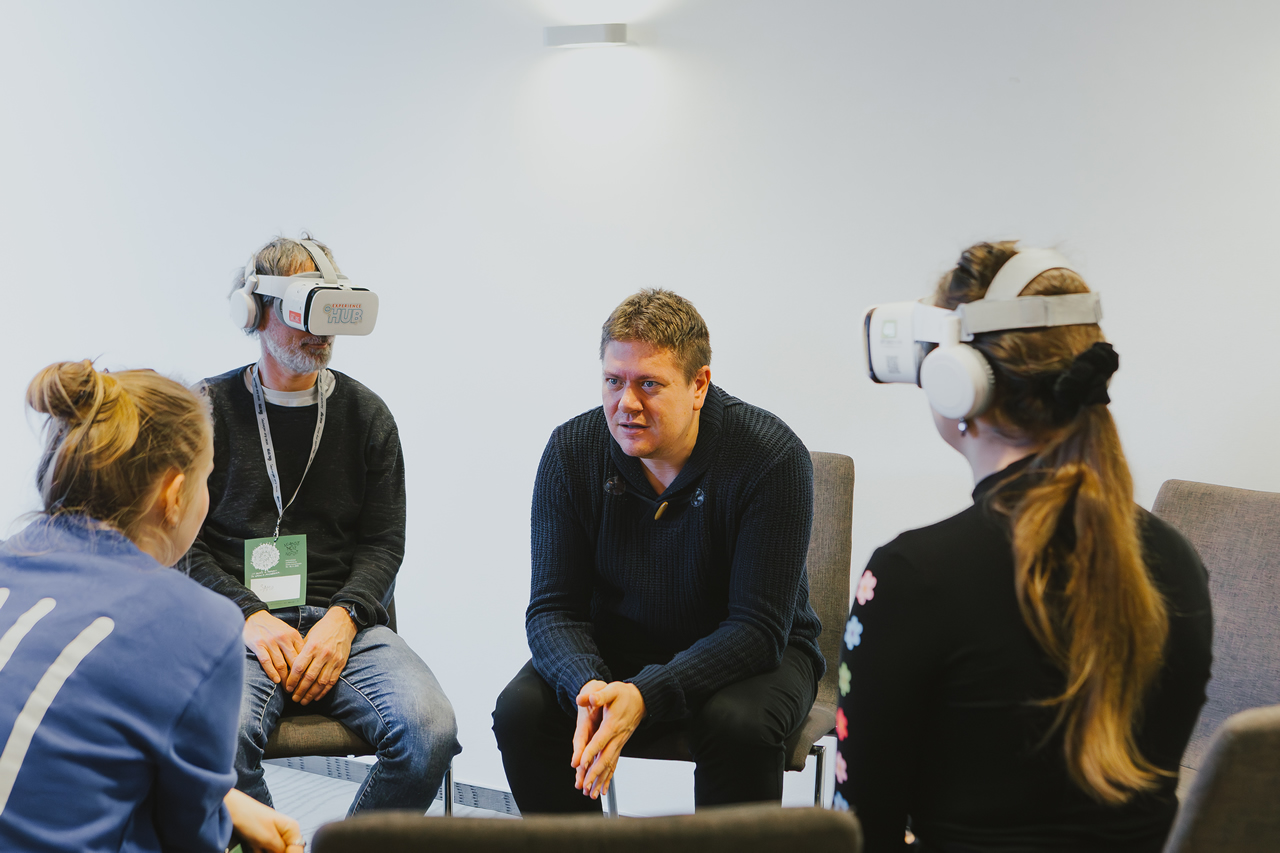
After the morning lectures, the programme opened into a diverse selection of workshops, allowing participants to explore the conference themes through embodied practice, reflection, creativity and emerging technologies. Each workshop offered a different entry point into understanding support systems—through the body, imagination, movement, supervision or digital tools—while encouraging participants to learn from their own experiences and from one another.